Wired KNX or modern wireless? A clear comparison of reliability, cost, scalability, and the right choice for your villa.
Every villa project begins with the same architectural decision: wired or wireless. The choice shapes the budget, the timeline, and the way the home will feel for the next decade. This article is the honest comparison we wish every client read before signing a contract.
What is KNX?
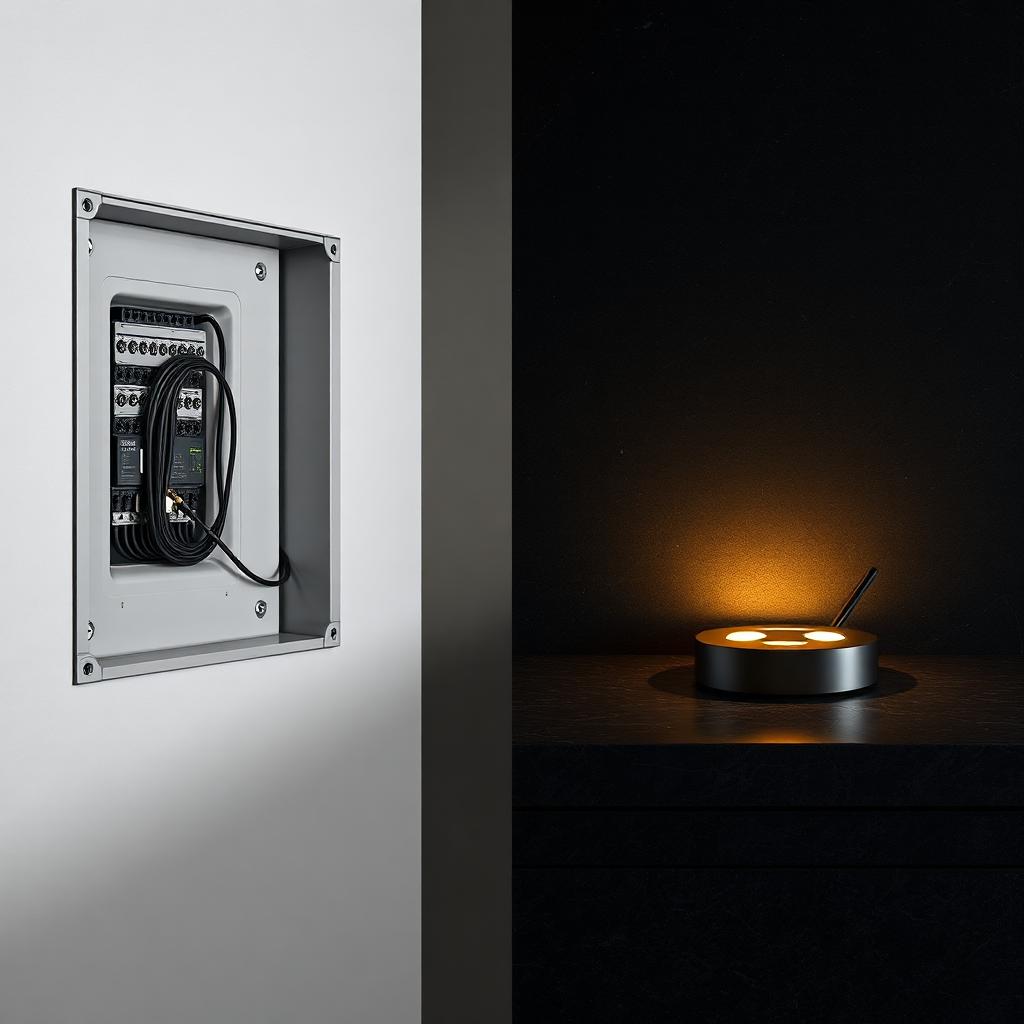
KNX is an open European standard for building automation, used in luxury residences and high-end commercial projects across more than 190 countries. It is a wired bus system: a single low-voltage cable runs between every controlled device, allowing them to communicate directly without a central server. If one component fails, the rest of the system keeps working.
What counts as a 'wireless smart home system'?
Wireless platforms include Lutron Caséta, Aqara, Shelly, Sonoff, Philips Hue, and parts of Control4 and Crestron product lines that use Zigbee, Z-Wave, Thread, or proprietary RF protocols. They communicate over the air rather than through a dedicated wire.
Reliability
KNX is the clear winner. A correctly installed KNX bus is essentially immune to Wi-Fi outages, router replacements, and software updates pushed by third parties. In Dubai, where many villas suffer from intermittent ISP issues during peak hours, this matters more than it sounds.
Wireless systems have improved enormously, and a well-designed Thread or Zigbee mesh is genuinely reliable for an apartment or a small villa. But at the scale of a 10,000 sq ft compound, wireless density becomes a real engineering challenge.
Installation timing
KNX must be planned during construction or major renovation. Once walls are closed, retrofitting bus cable is invasive and expensive. Wireless systems, by contrast, can be installed in a finished home in days rather than weeks.
Cost
Hardware-for-hardware, KNX is more expensive — typically 30–60% more than an equivalent Control4 or wireless installation. But over a 15-year horizon, the maintenance and replacement costs tend to favour KNX, because the components themselves rarely fail and the protocol does not become obsolete.
User experience
This is the most overlooked factor. The system the family actually touches every day is the keypad on the wall and the app on the phone. Both KNX and the better wireless platforms can deliver a beautiful user experience — what matters more is the programmer behind it. A poorly designed KNX system feels worse than a beautifully designed Lutron Caséta installation.
Scalability
KNX scales effortlessly from a single room to an entire compound. Wireless mesh networks become harder to manage as the device count climbs above roughly 150–200 devices, particularly in villas with dense concrete walls or substantial metalwork.
Which should you choose?
Choose KNX when…
- The villa is under construction or about to be renovated
- You expect this to be your long-term home
- Total floor area exceeds 6,000 sq ft
- Lighting design is central to the architectural vision
- You want European keypads with mechanical engraving
Choose a wireless platform when…
- The home is already finished and rewiring is impractical
- You are renting or planning to move within a few years
- Budget for hardware is tighter than for programming
- You want to start small and expand room by room
Our honest recommendation
For a new villa in Dubai, KNX combined with Lutron HomeWorks is, in our experience, the most enduring foundation. For an existing villa where construction is not feasible, a well-designed wireless system delivered by a competent integrator can be remarkable — and is far better than a half-finished KNX project.
FAQ
Frequently asked questions
- Is KNX worth the extra cost over a wireless system?
- For a long-term home in a new or fully renovated villa, yes. KNX offers longevity, scalability, and reliability that wireless systems cannot match at the same scale. For an existing apartment or short-term home, a well-designed wireless system often delivers better value.
- Can KNX and wireless devices coexist?
- Yes. A KNX backbone can integrate with Wi-Fi, Zigbee, and Thread devices through gateways. We frequently use this approach to add modern wireless cameras, voice assistants, and smart appliances to a wired KNX villa.
- How long does KNX installation take?
- First-fix cabling is coordinated with the electrical contractor during construction. Programming and commissioning for a typical villa takes 4–8 weeks after the home reaches a paint-ready state.
- Do wireless smart home systems work with weak Wi-Fi?
- Most do not. A well-designed wireless smart home requires a robust mesh Wi-Fi network with enterprise-grade access points. We rebuild the network as part of every wireless smart home project we deliver.
Private Consultation
Bring this thinking into your villa
Speak with a VELORIA design consultant for a private, no-pressure walkthrough of options tailored to your home.